Walk into any tint shop and you will hear three words: dyed, carbon and ceramic. They are all window film, they can all look similar on the glass, and the price gap between them can be large. Here is what actually separates them in the ceramic vs carbon tint debate, and where dyed film fits in, so you can pick the right one for how you drive.
Dyed film: the entry level
Dyed film gets its color from a layer of dye. It darkens the glass and adds privacy, and it is the least expensive option. The trade-off is performance and lifespan. Dye absorbs some heat but rejects very little of it, and over the years it can fade or shift toward purple. If your main goal is a darker look on a tight budget, dyed film does the job. If you want a cooler cabin, look further up the range.
Carbon film: color-stable and a real step up
Carbon film uses carbon particles instead of dye. Those particles do not fade, so the film keeps its color, and they block a meaningful share of the infrared heat that makes a parked car feel like an oven. Carbon has a matte, non-reflective finish that suits most vehicles, and because it contains no metal it does not interfere with phone, GPS or radio signals.
Ceramic film: the most heat rejection
Ceramic film is built with nano-ceramic particles that target infrared heat specifically. That is why a lighter ceramic film can keep a cabin cooler than a much darker dyed film. Ceramic also gives the clearest view out, especially at night, blocks up to 99% of UV, and is signal-friendly like carbon. It costs more, and for drivers who spend a lot of time in the car or park outside all day, it is usually worth it.
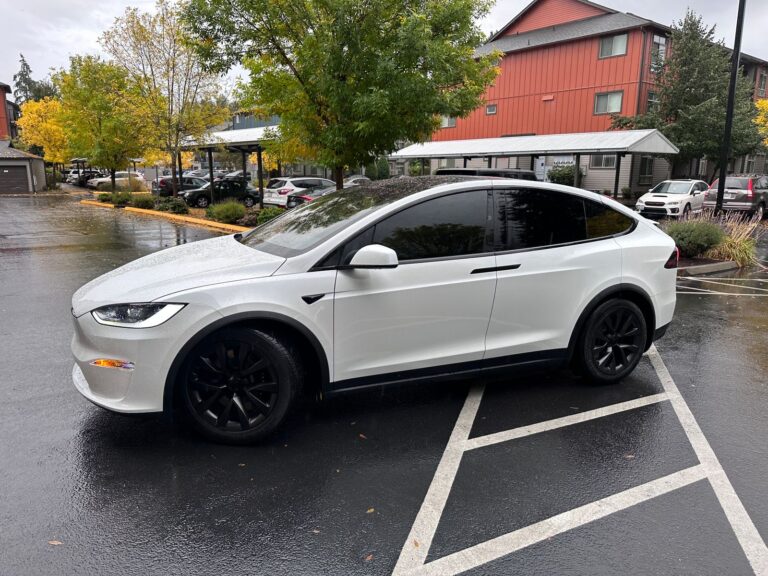
Ceramic vs carbon tint at a glance
Here is how the three films compare on the points drivers ask about most.
| Film | Heat rejection | Holds its color | Signal friendly | Price |
|---|---|---|---|---|
| Dyed | Low | Can fade over time | Yes | Lowest |
| Carbon | Medium | Yes | Yes | Mid-range |
| Ceramic | Highest | Yes | Yes | Highest |
Darkness and heat are not the same thing
This is the part most people get wrong. How dark a film looks is measured as VLT, the percentage of visible light it lets through. How much heat it blocks depends on the film technology. A 35% ceramic film will generally reject more heat than a 20% dyed film, even though it looks lighter. Choose the shade for the look and privacy you want, and choose the film type for comfort.
Dyed vs ceramic tint: is the upgrade worth it?
The dyed vs ceramic tint choice comes down to heat. Both can look the same shade from the outside, but ceramic film keeps far more infrared heat out of the cabin, holds its color and gives a clearer view at night. If your car sits in the sun at work or you drive long distances, the upgrade usually pays off in comfort. If you mainly want a darker look and park in the shade, dyed film can be enough.
What Maryland law allows
The film type does not change the legal limit. In Maryland, every side and rear window on a sedan or coupe must be 35 percent or lighter, and on SUVs, vans and light trucks only the front door windows must meet that limit, according to Maryland State Police guidance. We check the final shade on your own glass before we install.
Which one should you choose?
- Dyed if you want a darker look at the lowest price and heat is not your main concern.
- Carbon if you want lasting color and solid heat rejection at a mid-range price.
- Ceramic if comfort matters most: long commutes, kids in the back seat, leather interiors, or a car that sits in the sun.
Not sure? Bring your vehicle to our Windsor Mill studio or call 667-438-7433. We will show you each film on glass and give you a clear price for your vehicle. You can also see our auto tinting options or request a quote.